
Category Archives: Uncategorized

Amazing Organic Skincare Ingredients That You May Not Know About, pt. 2


Organic Ingredients for Facial Care


Last week, I shared some amazing organic skincare ingredients that I use in my own Living Earth Beauty line. I’ve talked about such magical things as mucuna, mangosteen, and chaga, and now I’d like to share with you some of the balancing ingredients that are especially beneficial for use in facial toning and cleansing.


Anti-Inflammatory & Anti-Microbial Essential Oils


Citrus sunrise doubles as an organic facial toner and cleanser and is not only generally uplifting, invigorating, and a pleasure to use, but it has anti-inflammatory, anti-bacterial, anti-fungal, and anti-microbial properties that make it a gentle skin cleanser and exfoliant is great for all skin types and also helps with acne and oily skin while promoting a healthy skin pH.


What makes my skin love it so much?

Citrus sunrise is made with several hydrosols and essential oils, including, calendula hyrdrosol, lemon verbana, and a variety of citrus oils (mandarin, lemon, lime peel, and blood orange).


How do they work?

  • Calendula is a truly versatile herb that can be used beneficially for just about anything skin related. It’s useful for rashes, hotspots, scratches, abrasions, sunburns, scars, and many skin disorders. Calendula hydrosol makes a great all around skin tonic and it has a refreshing, mildly sweet floral scent.
  • Lemon verbena has a strong antioxidant capacity, making it revitalizing for all skin types and a great aid for cellular regeneration. Not only that, it’s a mild astringent, a gentle skin cleanser, and is lightly stimulating and uplifting.
  • Mandarin essential oil, aside from having an invigorating scent, is a natural antiseptic that gently cleanses the skin and clears away harmful bacteria while helping balance oily skin and heal acne.
  • Lemon essential oil is anti-bacterial, anti-microbial, anti-fungal, and anti-inflammatory, making it an excellent natural aid for cleansing and returning skin to its healthy balanced state.
  • Lime peel essential oil has similar properties that make it an excellent complement to lemon essential oil. In addition, it can be slightly more helpful with acne and it adds a pleasantly tart scent to anything it’s used in.
  • Blood orange essential oil is said to be the most antidepressant of all of the essential oils. Similar to the other citrus oils, it has anti-inflammatory and antiseptic properties.


Rejuvenating and Cleansing Hydrosols


Moonlight Mist is the natural evening compliment to Citrus Sunrise. While Citrus Sunrise is invigorating and rejuvenating while deeply and gently cleansing skin, Moonlight Mist is soothing, calming, and relaxing – perfect for clearing away the day’s debris and sinking into a sweet, lovely evening before bed.


Why does my skin love it so much?

Moonlight Mist is made with several special ingredients, including, rose hydrosol, tulsi (holy basil) hydrosol, rose geranium essential oil, and chamomile essential oil. Deeply hydrating and soothing, these leave skin feeling refreshed and soft.


How do they work?

  • Rose hydrosol is predominantly a gentle cooling and anti-inflammatory agent, and has possibly been used for thousands of years for just that purpose. However, it has been found more recently to also have anti-bacterial properties which help regulate skin oil production.
  • Tulsi (holy basil) hydrosol is soothing and calming, and has excellent anti-bacterial and anti-fungal properties. It is a highly medicinal herb and is considered a sacred plant.
  • Rose geranium hydrosol has been used to assist wound healing for centuries. It has analgesic, antibacterial, antiseptic, astringent, and anti-inflammatory properties that make it excellent for gently cleansing skin, helping with acne, and balancing skin pH.
  • Chamomile essential oil, similar to those above, has antimicrobial and anti-inflammatory properties. It is also is antispasmodic and analgesic. It is extremely healing and wonderful for treating skin conditions. It has a gently sweet, apple-like aroma. Chamomile has been used for centuries in aromatherapy and is known as an anti-depressant and an herb of calming.

The Dirty Thirty

Photo Credit: OrangeCounty_Girl

Photo Credit: OrangeCounty_Girl

If you see any of the following ingredients in skin, hair, oral, and body care products, NEVER purchase them. Or, if you already have the products, THROW THEM OUT immediately (please try to dump out the contents, and wash, then recycle the container). Remember, even many so-called ‘natural’ products contain these ingredients.

This list was compiled by Teens for Safe Cosmetics (www.TeensforSafeCosmetics.org).

1.      ALUMINUM ZIRCONIUM and OTHER ALUMINUM COMPOUNDS

Function: Used to control sweat and odor in the underarms by slowing down the production of sweat.

Present in: Antiperspirants. Banned by EU.

Health concerns: Linked to the development of Alzheimer’s Disease; may be linked to breast cancer; probable neurotoxin; possible nervous system, respiratory, and developmental toxin.

2.       BENZYL ACETATE

Function: Solvent; hidden within “fragrance.”

Present in: Many cosmetics and personal care products, read labels.

Health concerns: Linked to pancreatic cancer; easily absorbs into skin causing quick systemic effects; animal studies show hyperemia of the lungs; possible gastrointestinal, liver, and respiratory toxicant; possible neurotoxin.

3.       BENZALKONIUM CHLORIDE and BENZETHONIUM CHLORIDE

Function: Antimicrobial agent, deodorant, preservative, biocide.

Present in: Moisturizer, sunscreen, facial cleanser, acne treatment, pain relief. Restricted in Japan and Canada.

Health concerns: Immune system toxicant; may trigger asthma; possible organ system toxicant; animal studies show endocrine disruption and brain, nervous system, respiratory and blood effects; possible carcinogen.

4.       BRONOPOL

Function: Preservative.

Present in: Moisturizer, body wash, facial cleanser, makeup remover, anti-aging products. Restricted in Canada.

Health concerns: Immune system toxicant; lung and skin toxicant; animal studies show endocrine disruption and gastrointestinal, brain and nervous system effects; irritant.

5.       BUTYL ACETATE

Function: Solvent in polishes and treatments, prevents chipping.

Present in: Nail polish and nail treatments.

Health concerns: Repeated exposure causes skin dryness and cracking; vapors may induce drowsiness or dizziness; flammable.

6.       BUTYLATED HYDROXYTOLUENE (BHT)/ BUTYLATED HYDROXYANISOLE (BHA)

Function: Anti-Oxidant; slows down the rate at which product ingredients change in color.

Present in: Many cosmetics and personal care products, read labels.

Banned by EU.

Health Concerns: Immune system toxicant; endocrine disruptor; probable human carcinogen; animal studies show brain, liver, neurotoxin, reproductive and respiratory toxicant.

7.       ETHOXYLATED INGREDIENTS:CETEARETH/PEG COMPOUNDS

Function: Surfactant, emulsifying or cleansing agent, penetration enhancer.

Present in: Many cosmetics and personal care products, read labels.

Health concerns: Animal studies show brain, nervous system and sense organ effects; irritant; reproductive and skin toxin, alters skin structure, allowing other chemicals to penetrate deep into the skin and increasing the amounts of other chemicals that reach the bloodstream; may contain harmful impurities.

8.       COAL TAR

Function: Controls itching and eczema, softens and promotes the dissolution of hard, scaly, rough skin, also used in hair dyes.

Present in: Shampoo and Hair Dye. Banned by Canada and EU.

Health concerns: Known human carcinogen; skin and respiratory toxicant.

9.       COCAMIDE DEA/ LAURAMIDE DEA

Function: used as foaming agents in shampoos and bath products, and as emulsifying agents in cosmetics; foaming and cleansing agents for “mouth feel.”

Present in: Many cosmetics and personal care products, read labels.

Health concerns: Human immune system toxicant; forms carcinogenic nitrosamine compounds if mixed with nitrosating agents; animal studies show sense organ effects and skin irritation; may contain harmful impurities.

10.   DIETHANOLAMINE (DEA)

Function: pH adjuster.

Present in: Sunscreen, moisturizer, foundation, hair color.

Health concerns: Skin and immune system toxicant; possible carcinogen; irritant; animal studies show endocrine disruption and neuro developmental, brain and nervous system effects; may trigger asthma.

11.   ETHYL ACETATE

Function: Solvent.

Present in: Nail polish products, mascara, tooth whitening, perfume.

Health concerns: Probable neurotoxin; possible nervous system toxin; possible carcinogen; irritant; highly flammable

12.   FORMALDEHYDE

Function: Disinfectant, germicide, fungicide, preservative.

Present in: Deodorant, nail polish, soap, shampoo, shaving cream. Restricted in Canada. Banned by EU.

Health concerns: Immune system, repertory, hematological, and skin toxicant; probable carcinogen and cardiovascular toxicant; can damage DNA; may trigger asthma; animal studies show sense organ, brain, and nervous system effects; possible human development toxicant.

13.   FORMALDEHYDE-RELEASING PRESERVATIVES ( QUATERNIUM-15, DMDM HYDANTOIN, DIAZOLIDINYL UREA AND  IMIDAZOLIDINYL UREA, DEA, MEA, TEA)

Function: Anti-microbial preservative.

Present in: Many cosmetics and personal care products, read labels.

Health concerns: Forms nitrosamines when in the presence of amines such as MEA, DEA and TEA; probable immune system, blood, cardiovascular and skin toxicant; possible carcinogen; animal studies show endocrine disruption, nervous system and organ system effects; may contain harmful impurities.

14.   FRAGRANCE (PARFUM)

Function: Deodorant, masking, perfuming

Present in: Many cosmetics and personal care products, read labels.

Health concerns: Immune system toxicant; possible neurotoxin; can contain between 10 and 300 different chemicals, many of which have never been tested for safety; see phthalates. Labeling can be confusing. If uncertain, check with manufacture.

15.   HYDROQUINONE

Function: Antioxidant, fragrance ingredient, skin bleaching agent, hair colorant.

Present in: Skin fading/lightener, facial moisturizer, anti-aging, sunscreen, hair color, facial cleanser and moisturizer. Restricted in Canada.

Health concerns: Immune system and respiratory toxicant; probable neurotoxin; possible carcinogen; irritant; animal studies show endocrine disruption.

16.   IODOPROPYNYL BUTYLCARBAMATE

Function: Preservative.

Present in: Many cosmetics and personal care products, read labels. Restricted in Japan.

Health concerns: Human toxicant; possible liver immune system toxin; allergenic.

17.   LEAD and LEAD COMPOUNDS

Function: Colorant.

Present in: Hair dye, hair products. Traces found in some red lipstick. Restricted in Canada.

Health concerns: Probable carcinogen; developmental, respiratory, gastrointestinal and reproductive toxicant; reduced fertility; animal studies show metabolic, brain and nervous system effects; suspected nano-scale ingredients with potential to absorb into the skin

18.   METHYLISOTHIAZOLINONE (MI/MCI) and METHYLCHLOROISOTHAIZOLINONE

Function: Preservative.

Present in: Many cosmetics and personal care products, read labels. Restricted in Canada and Japan.

Health concerns: Immune system toxicant; animal studies show restricted growth of the axons and dendrites of immature nerves, neurotoxicity and positive mutation results; can lead to a malfunction in the way neurons communicate with each other; especially detrimental to  a developing nervous system.

19.   OXYBENZONE (BENZPENONE-3)

Function: Sunscreen Agent; Ultraviolet Light Absorber, UV Absorber; UV Filter.

Present in: Sunscreens and makeup

Health concerns: Associated with photoallergic reactions and immunotoxicity.  Probable carcinogen and endocrine disrupter; Enhanced skin absorption and bioaccumulates to dangerous levels; biochemical cellular changes.  Developmental and reproductive toxicity.

20.   PARABENS (METHYL, ETHYL, PROPYL AND BUTYL)

Function: Preservative and anti-bacterial agent.

Present in: Many cosmetics and personal care products, read labels.

Health concerns: May alter hormone levels, possibly increasing risk for certain types of cancer, impaired fertility, or alteration of the development of a fetus or young child; studies have found parabens in breast tumors; probable skin toxicant; animal studies show brain and nervous system effects.

21.   PETROLATUM (PETROLEUM)

Function: Forms barrier on skin; makes lipsticks shine and creams smoother; inexpensive skin softener.

Present in: Many cosmetics and personal care products, read labels. Banned by EU.

Health concerns: May be contaminated with impurities, linked to cancer or other significant health problems.

22.   PHTHALATES (DIBUTYL PHTHALATES)

Function: Fragrance ingredient, plasticizer, solvent.

Present in: Many cosmetics and personal care products, read labels. Banned in EU.

Health concerns: Immune system toxicant; developmental and reproductive toxin; respiratory toxicant; probable neurotoxin; possible carcinogen and endocrine disruptor; bio-accumulative in wildlife.

23.   P-PHENYLENEDIAMINE (PPD)

Function: Hair colorant.

Present in: Hair dye, shampoo, hair spray. Restricted in Canada.

Health concerns: Immune system and respiratory toxicant; probable neurotoxin; eczema; possible nervous system, skin, kidney and liver toxicant; irritant; may trigger asthma and gastritis; shown to cause cancer in animal studies.

24.   PROPYLENE GLYCOL

Function: Solvent, penetration enhancer, conditions skin, controls viscosity and keeps products from melting in high or freezing when it is cold.

Present in: Many cosmetics and personal care products, read labels.

Health concerns: Alters skin structure, allowing other chemicals to penetrate deep into the skin and increasing the amounts of other chemicals that reach the bloodstream; animal studies show reproductive effects, positive mutation results, brain and nervous system effects and endocrine disruption.

25.   SODIUM LAURETH SULFATE

Function: Surfactant, penetration enhancer.

Present in: Many cosmetics and personal care products, read labels.

Health concerns: Alters skin structure, allowing other chemicals to penetrate deep into the skin, increasing the amounts of other chemicals that reach the bloodstream; Irritant; animal studies show sense organ effects.

26.   TALC

Function: Absorbs moisture, anti-caking agent, bulking agent.

Present in: Blush, powder, eye shadow, baby powder, deodorant.

Health concerns:  Carcinogen; link between talcum powder and ovarian cancer; talc particles are similar to asbestos particles and data suggests that it can cause tumors in the lungs; probable respiratory toxin;

27.   TOLUENE

Function: Antioxidant, solvent to improve adhesion and gloss.

Present in: Nail polish and hair dye.

Health concerns: Liver toxin; probable developmental, nervous system and respiratory toxin; possible cardiovascular, musculoskeletal, renal and sense organ toxin; possible carcinogen and reproductive toxin; irritant; highly flammable;

28.   TRICLOSAN

Function: Anti-bacterial agent, deodorant, preservative, biocide. Reduces and controls bacterial contamination on the hands and on treated products.

Present in: Antibacterial soaps, deodorants, toothpastes, mouthwashes, face wash and cleaning supplies. Restricted in Japan and Canada.

Health concerns: Probable endocrine disrupter and carcinogen; easily bio-accumulates to dangerous levels; irritant; animal studies show reproductive and other broad systematic effects; potentially contaminated with impurities linked to cancer and other significant health problems; studies have shown it can actually induce cell death when used in mouth washes.

29.   TREITHANOLAMINE (TEA)

Function: Fragrance ingredient, pH adjuster, surfactant.

Present in: Hand & body lotion, shaving creams, soap, shampoo, bath powders and moisturizer.

Health concerns: Immune system toxicant; possible carcinogen; animal studies show endocrine disruption; may trigger asthma; forms carcinogenic nitrosamine compounds if mixed with nitrosating agents.

30.    1,4 DIOXANE

Function: Penetration enhancer

Present in: Body lotion, moisturizers, sunless tanning products, baby soap, anti-aging products..

Health concerns: EPA classifies it as a probable carcinogen found in 46 of 100 personal care products marketed as organic or natural, and the National Toxicology Program considers it a known animal carcinogen.  Acute (short-term) inhalation exposure to high levels of 1,4 dioxane has caused vertigo, drowsiness, headache, anorexia and irritation of the eyes, nose, throat and lungs of humans.  It may also irritate the skin.

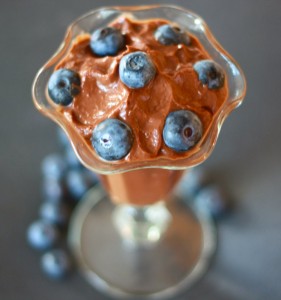
Recipe: Raw Chocolate Pudding (and the truth about ‘raw’ cashews)

Photo Credit: sweetonveg

Photo Credit: sweetonveg

Jed loves this treat. He adores dipping fresh, organic berries, especially strawberries, in it.

Ingredients

1/2 cup – 2 cups  soaked Raw, Organic Cashews*
4 Tablespoons Raw, Organic Carob Powder (We use Carob, but you may use Raw Cacao Powder, if you like, for even more chocolaty-richness). We like the Raw European Carob, as it has a “roasted” flavor like chocolate, but it is raw.
2 teaspoons Vanilla (I use pure dried/powdered vanilla bean)
Sweetener of your choice (I use Stevia, but you could also use raw, organic Honey, Yacon Syrup, or Agave Nectar)
a dash of Cinnamon
spring or purified Water

Instructions
Soak 1/2 – 2 cups of truly raw, organic Cashews* overnight. (The amount of cashews depends on how many people you want to serve or how much you want left over).

  • Drain and rinse the Cashews.
  • Place all ingredients in your Vita-Mix (or very powerful blender) and blend until completely smooth. Start with approximately a 1/2 cup of water. Add more water if the consistency is too thick or it will not blend easily.
  • Enjoy as is or as a sweet, chocolaty dip for fruit

* All cashews are steamed to remove the skin, unless the package says that they have been skinned by hand. Therefore, cashews are not raw unless they are labeled “truly raw” and are treated by hand. Eating only truly raw cashews ensures that the fat has not oxidized due to the heat applied to them and that their enzymes are intact.

*The oils found in the cashew shell are poisonous. Cashews are in the same family as poison ivy and poison sumac. This is why you always see them shelled and skinned. I was concerned about this fact for while and stopped eating them. But, I soon came to my senses. Being cashew-free only lasted a few months – they are so luscious. I eat them alone as dessert sometimes, they are so naturally sweet. They really are totally safe and extremely healthy to eat when the skin is removed and when they are truly raw, so no need to go without these sweet, creamy nuts.

I Am Featured in an Exclusive Magazine Interview

Photo Credit: suttonhoo

Photo Credit: suttonhoo

I am featured in an in-depth interview in the current issue of Pear Magazine. Read all about my story, how and why Living Earth Beauty came to be, and my answers to many skin and beauty questions.

Read it here.

I Will Address Your Questions and Concerns About Veganism

baby lamb

Photo Credit: BotheredByBees

I am currently spending a lot of time writing an article about veganism and cruelty-free living, especially in the arenas of food and skin care. I am attempting to cover as much as possible, without going on for days. I would love to address your questions and concerns. Please share them in the comments below.

In the meantime, here are some quotes to inspire consideration:

“Until he extends the circle of compassion to all living things, man will not himself find peace.” -Albert Schweitzer

“Vegetarian food leaves a deep impression on our nature. If the whole world adopts vegetarianism, it can change the destiny of humankind.” -Albert Einstein

“Animals are my friends…and I don’t eat my friends.” -George Bernard Shaw

“If a man aspires towards a righteous life, his first act of abstinence is from injury to animals.” -Albert Einstein

“I do feel that spiritual progress does demand at some stage that we should cease to kill our fellow creatures for the satisfaction of our bodily wants.” -Gandhi

“If man wants freedom why keep birds and animals in cages? Truly man is the king of beasts, for his brutality exceeds them. We live by the death of others. We are burial places! I have since an early age abjured the use of meat.” -Leonardo-da-Vinci

“Flesh eating is simply immoral, as it involves the performance of an act which is contrary to moral feeling: killing. By killing, man suppresses in himself, unnecessarily, the highest spiritual capacity, that of sympathy and pity towards living creatures like himself and by violating his own feelings becomes cruel.” “As long as there are slaughterhouses, there will be battlefields.” -Leo Tolstoy

“How can man be possessed of kindness who, to increase his own flesh, eats the flesh of other creatures. As those possess no property who do not take care of it, so those possess no kindness who feed on flesh.” “Like the (murderous)mind of him who carries a weapon (in his hand), the mind of him who feasts with pleasure on the body of another (creature), has no regard for goodness.” “Man did not weave the web of life: he is merely a strand in it. Whatever he does to the web, he does to himself. To harm the earth is to heap contempt on its creator.” -Red Indian Chief (1854)

“We pray on Sundays that we may have light/To guide our footsteps on the path we tread;/We are sick of war, we don’t want to fight,/And yet we gorge ourselves upon the dead.” -George Bernard Shaw

“My refusing to eat flesh occasioned an inconveniency, and I was frequently chided for my singularity, but, with this lighter repast, I made the greater progress, for greater clearness of head and quicker comprehension” “Flesh eating is unprovoked murder.” -Benjamin Franklin

“I have no doubt that it is a part of the destiny of the human race, in its gradual improvement, to leave off eating animals.” -Henry Thoreau:

“I am in favor of animal rights as well as human rights. That is the way of a whole human being” -Abraham Lincoln

Genesis 1:29 “Behold, I have given you every plant yielding seed which is upon the face of all the earth, and every tree with seed in its fruit; you shall have them for food. And to every beast of the earth, and to every bird of the air, and to everything that creeps on the earth, everything that has the breath of life, I have given every green plant for food.”

“There will never be any peace in the world as long as we eat animals.” -Isaac Bashevis Singer

“Not having known anything better does not alleviate the suffering of the animal. Its fundamental desires remain and it is the frustration of those desires that is a great part of its suffering. There are so many examples: the dairy cow who is never allowed to raise her young, the battery hen who can never walk or stretch her wings, the sow who can never build a nest or root for food in the forest litter, etc. Eventually we frustrate the animal’s most fundamental desire of all – to live.” -David Cowles-Hamar.

“In all the round world of utopia there is no meat. There used to be. But now we cannot stand the thought of slaughterhouses. And in a population that is all educated and at about the same level of physical refinement, it is practically impossible to find anyone who will hew a dead ox or pig. We never settled the hygienic aspect of meat-eating at all. This other aspect decided us. I can still remember as a boy the rejoicings over the closing of the last slaughterhouse.” -H.G. Wells

“There is something so very dreadful in tormenting those who have never harmed us, and who cannot defend themselves, who are utterly in our power, who have weapons neither of offence nor defense, that none but very hardened persons can endure the thought of it” -Cardinal Newman

“There will come a time…when civilized people will look back in horror on our generation and the ones that preceded it: the idea that we should eat other living things running around on four legs, that we should raise them just for the purpose of killing them! The people of the future will say “meat-eaters!” in disgust and regard us in the same way we regard cannibals and cannibalism” -Dennis Weaver (actor)

“Awareness is bad for the meat business. Conscience is bad for the meat business. Sensitivity to life is bad for the meat business. DENIAL, however, the meat business finds indispensable.” -John Robbins, Diet for a New America

“When a man has pity on all living creatures then only is he noble.” -Buddha (563? – 483? B.C.)

“Cruelty to animals is as if humans did not love God.” -Cardinal John Henry Newman

“…many vivisectors still claim that what they do helps save human lives. They are Iying. The truth is that animal experiments kill people, and animal researchers are responsible for the deaths of thousands of men, women and children every year.” -Dr. Vernon Coleman, Fellow of the Royal Society of Medicine, UK.

“We stopped eating meat many years ago. During the course of a Sunday lunch we happened to look out of the kitchen window at our young lambs playing happily in the fields. Glancing down at our plates, we suddenly realized that we were eating the leg of an animal who had until recently been playing in a field herself. We looked at each other and said, “Wait a minute, we love these sheep–they’re such gentle creatures. So why are we eating them?” It was the last time we ever did.” -Linda and Paul McCartney

“To be non-violent to human beings, [but] to be a killer or enemy of poor animals[?] In this age there is always enmity against animals, and therefore the poor creatures are always anxious. The reaction of the poor animals is being forced on human society, and therefore there is always the strain of cold or hot war between men, individually, collectively or nationally… “The earth affords a lavish supply of riches, of innocent foods, and offers you banquets that involve no bloodshed or slaughter; only beasts satisfy their hunger with flesh, and not even all of those, because horses, cattle, and sheep live on grass. As long as men massacre animals, they will kill each other. Indeed, he who sows the seeds of murder and pain cannot reap joy and love.” -Pythagoras

“To my mind, the life of a lamb is no less precious than that of a human being. I should be unwilling to take the life of a lamb for the sake of the human body.” -Mohandas Gandhi (1869-1948)

“I abhor vivisection with my whole soul. All the scientific discoveries stained with innocent blood I count as of no consequence.” Mahatma Gandhi

“The human body has no more need for cows’ milk than it does for dogs’ milk, horses’ milk, or giraffes’ milk.” -Michael Klaper, MD

“In every respect, vegans appear to enjoy better health in comparison to both vegetarians and non-vegetarians.” -T. Colin Campbell, PhD Professor of Nutrition, Cornell University (letter dated 3/29/98)

“If you step back and look at the data, the optimum amount of red meat you eat should be zero.” -Walter Willett, M.D., of Brigham and Women’s Hospital, director of a study that found a close correlation between red meat consumption and colon cancer.

“When we kill the animals to eat them, they end up killing us because their flesh, which contains cholesterol and saturated fat, was never intended for human beings.” -William C. Roberts, M.D., editor of The American Journal of Cardiology

“The beef industry has contributed to more American deaths than all the wars of this century, all natural disasters, and all automobile accidents combined. If beef is your idea of `real food for real people,’ you’d better live real close to a real good hospital.” -Neal D. Barnard, M.D., President, Physicians Committee for Responsible Medicine, Washington, D.C